| Canton | Zurich |
|---|---|
| City | Zurich |
| Water hardness | 15.3°fH - 31.7°fH |
Water hardness is a crucial factor in the quality of tap water in Switzerland and affects household appliances, faucets, skin, and hair. But what exactly does water hardness mean, and why does it vary from region to region? Here you will find valuable information on the causes and effects of water hardness, as well as practical tips on how to effectively manage limescale problems.
Our online water hardness calculator allows you to quickly and easily determine the average water hardness in your region.
No results were found.
soft
medium
hard
Water hardness in Switzerland is classified into four levels. In your region, the water hardness is *. This means your water hardness is within a good range. It's not hard enough to cause any problems in your home. Nevertheless, our water treatment systems can be used to revitalize your water and protect it against Legionella.
Water hardness in Switzerland is classified into four levels. In your region, the water hardness is [level] *. This means that limescale deposits from the relatively hard water in your home can cause problems. These include energy loss, a shorter lifespan for appliances, and increased cleaning effort. Our Mediagon limescale protection devices can help protect your home.
Water hardness in Switzerland is classified into four levels. In your region, the water hardness is [level] *. This means that limescale deposits from the hard water in your home can cause problems. These include energy loss, a shorter lifespan for appliances, and increased cleaning effort. Our Mediagon limescale protection devices can help protect your home.
* The values are derived from data published online by various municipalities in Switzerland regarding water hardness. Mediagon Water Treatment has collected and made this data available to you. It is possible that some of the data may no longer be up-to-date, for example, due to a change in the water source. Therefore, these values are intended only as a preliminary guide.
To understand what water hardness means and its impact on daily life, it's important to know exactly what limescale is. Limescale consists primarily of calcium and magnesium, with calcium being the main component. This mineral is essential for the body, supporting healthy bones and teeth and promoting nerve and muscle function. The body absorbs calcium from various sources, including tap water, which picks up calcium minerals as it travels through nature.
In nature, water flows over stones, gravel, and through the subsoil, absorbing calcium carbonate (limescale). The more calcium and magnesium the water absorbs, the harder it becomes. Water hardness refers to the concentration of calcium and magnesium ions in the water and affects both its taste and the formation of limescale deposits in household appliances and pipes. Want to delve deeper into the topic of limescale? Click here for more information.
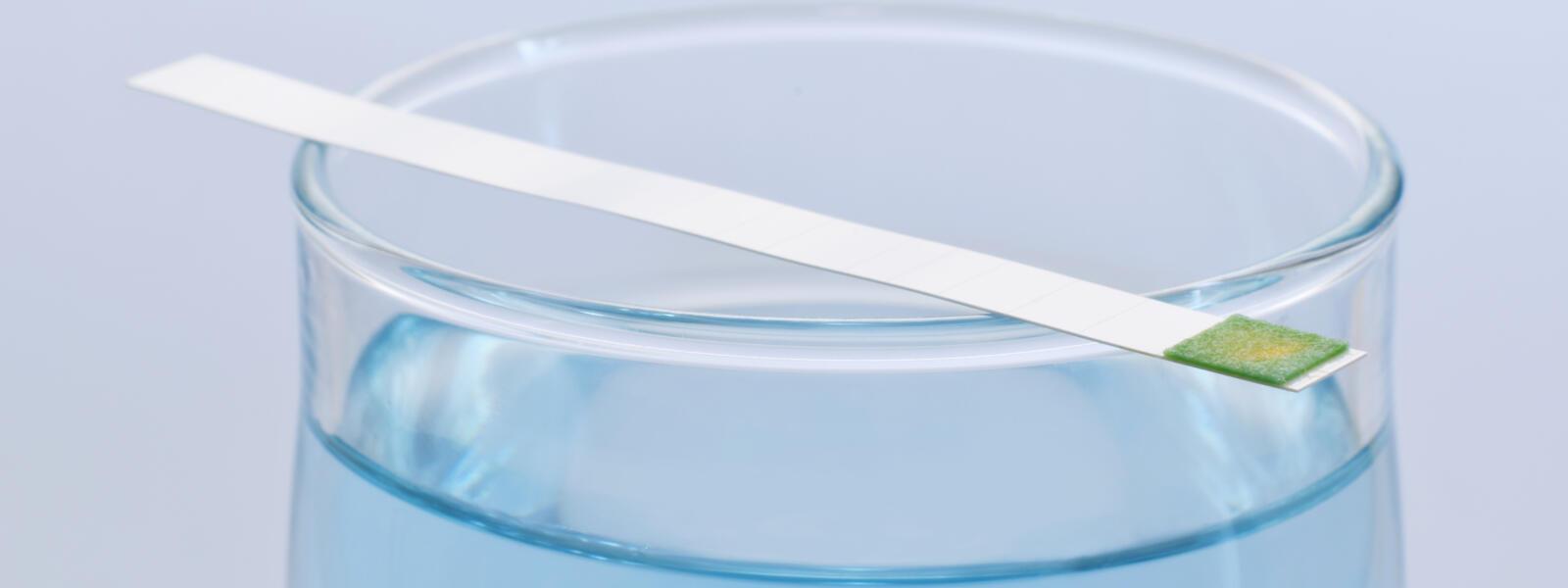
Water hardness is measured in °fH (French degrees of hardness) or °dH (German degrees of hardness). In Switzerland, the French degree of hardness (°fH) is commonly used. Many people wonder: "How can I measure my own water hardness? " There are simple methods such as water hardness test strips or electronic measuring devices. Another option is to use an online water hardness calculator, which helps you determine the water hardness based on your region or postal code. Here you can find out how to easily test water hardness, with or without test strips.
Many people wonder if and how the hardness of their drinking water affects their health. Hard water, rich in calcium and magnesium, is healthy for the body and promotes healthy bones and teeth. You can read more about this here. However, while hard water is generally harmless to health, it can shorten the lifespan of household appliances such as coffee makers and washing machines by causing limescale buildup.
In Switzerland, there are approximately 2,500 different water suppliers that utilize spring, groundwater, or surface water. These suppliers provide around 1 billion cubic meters of drinking water annually, which flows from thousands of wells. The water supply in Switzerland is decentralized, and almost every municipality is responsible for its own supply. As a result, water hardness can vary considerably from one municipality to another. In some cantons, there are even differences within the same postal code area. Below you will find an interactive map showing the water hardness range in each canton.
In Switzerland, water hardness varies considerably depending on the region, due to geological differences. Limescale and water hardness are closely related and often lead to deposits on faucets and household appliances. These regional variations in water hardness arise from the mixing of water that has flowed through soils rich in lime or low in minerals, depending on the region. A helpful tool for determining the water hardness in your area is to search for water hardness by postal code. Municipalities with a high proportion of groundwater and spring water tend to have harder water, while those with a high proportion of treated lake water tend to have softer water. While the water in Zurich is generally moderately hard, households in Basel suffer from hard water. An online water hardness calculator allows you to quickly and easily check the average water hardness for your region.
The ideal water hardness is a very subjective matter. Some people prefer completely demineralized water, while others appreciate the natural minerals in water. Ideal water hardness also depends heavily on personal taste. Demineralized water tastes quite different from mineral-rich water. The intended use also plays a role: private households often prioritize healthy, mineral-rich water for the whole family. Therefore, the ideal water hardness cannot be universally defined and varies from person to person.
Water hardness plays a crucial role in the lifespan and efficiency of household appliances such as washing machines, coffee makers, and kettles. Excessively hard water can significantly shorten the lifespan of these appliances, as limescale deposits impair their functionality. The ideal water hardness for household appliances lies in the medium range to prevent the leaching of all or some of the natural, health-promoting minerals like calcium and magnesium, while minimizing harmful limescale buildup.
Instead of reducing water hardness and thereby removing all or some of these valuable minerals, Mediagon Limescale Protection offers an innovative solution. This protects your household appliances while preserving the benefits of the minerals in the water. Unlike conventional water softeners, Mediagon doesn't remove the minerals, but rather alters the structure of the limescale particles. These are transformed into a fine, dust-like substance that no longer adheres to surfaces, fixtures, or appliances. Instead of stubborn deposits, the particles can simply be wiped away with a damp cloth.
Hard water is a common problem in many Swiss households, affecting various aspects of daily life. One of the most visible signs of hard water is limescale buildup on faucets, shower walls, and other surfaces. These stains are not only unsightly but also difficult to remove.
Household appliances such as coffee makers and kettles are also affected. They calcify more quickly, which impairs their performance and often leads to higher maintenance costs. Furthermore, limescale deposits can shorten the lifespan of appliances like washing machines, as they damage the mechanics and functionality.
A less obvious, but nonetheless significant, effect is the increased energy consumption caused by limescale deposits in heating systems. These deposits impede heat exchange, forcing the systems to require more energy to reach the desired temperature. The result: higher energy costs and less efficient use of your heating appliances.
Another common problem is dry skin and hair after showering, as you can read in more detail below.
In summary, hard water not only leads to visual and functional problems, but also to increased costs and puts a strain on your household appliances. Measures such as suitable limescale protection solutions can help minimize these challenges and significantly simplify your daily life.
Hard water has a noticeable impact on both household appliances and on skin and hair. Besides typical household problems like limescale stains on faucets and shower walls or limescale buildup in kettles, hard water affects the well-being of skin and hair in various ways.
The minerals in hard water leave a film on the skin that blocks moisture absorption. This can lead to a feeling of dryness and itching. Particularly sensitive skin can become irritated as a result.
Hard water can weaken the skin's protective barrier, increasing the risk of flaking or worsening of skin conditions such as eczema.
Minerals like calcium and magnesium can build up on the hair, making it difficult to comb, dull, and brittle. Especially treated and dyed hair loses its color vibrancy more quickly as a result.
Similar to the skin, hard water also leads to dryness on the scalp, which can cause itching and dandruff.
Shampoos and conditioners lather less well in hard water, which means more product is needed.
Limescale deposits can be combated in various ways. Many Swiss people rely on water softening systems that use an ion exchanger to remove the calcium components from the water. However, these systems often have a negative impact on the environment, as they release salts into the wastewater and alter the water's pH value. In addition to the environmental problems already mentioned, ion exchange-based water softening systems have several disadvantages, such as high operating costs, reduced water quality, salt consumption, corrosion risk, space requirements, and energy consumption.
These disadvantages demonstrate why alternative technologies represent an attractive, more environmentally friendly solution for many consumers. For consumers wondering, "What can I do about hard water?", there are also alternative solutions that are less harmful to the environment, such as Mediagon limescale protection.
Mediagon Limescale Protection alters the structure of limescale particles without removing natural minerals like calcium and magnesium from the water. This transforms the limescale into a fine, dusty form that can be easily wiped away with a damp cloth, instead of forming stubborn deposits. This chemical-free and sustainable method protects your household appliances while also being environmentally friendly.
Want to learn all about the different types of water softeners? Click here for more information.
Mediagon Limescale Protection offers an environmentally friendly and chemical-free alternative to conventional water softening systems. Instead of removing minerals from the water, Mediagon prevents limescale from depositing on surfaces. This protects your household appliances and preserves the valuable minerals in the water. This is not only beneficial to your health but also protects your appliances in the long term. Mediagon is the effective alternative to a salt-based system and provides environmentally friendly protection against limescale and rust in your home. Do you have problems with limescale and want to solve them without compromising water quality? Then Mediagon Limescale Protection is the perfect solution for you. Learn more here.
The nationwide overview map shows the values in your area.